
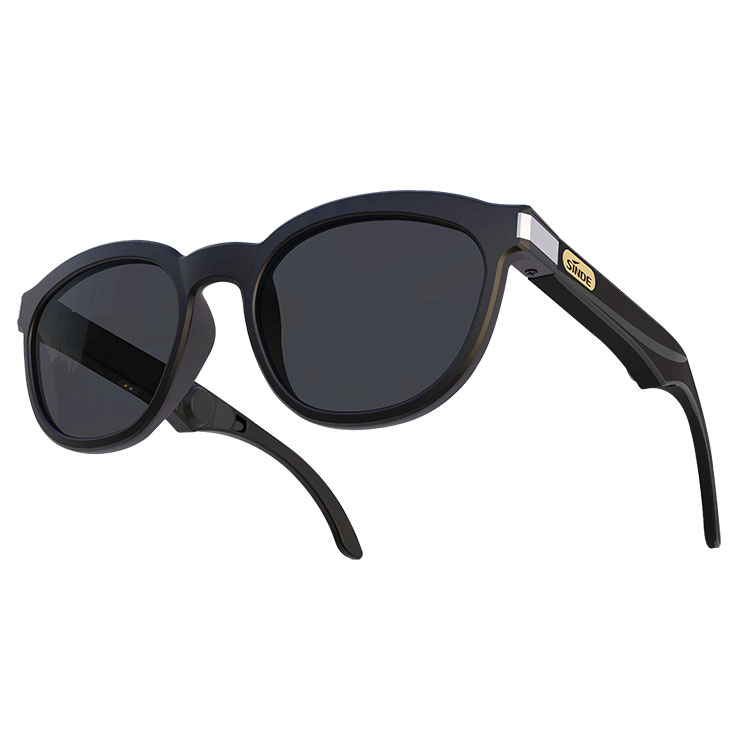
Bone Conduction Hearing Aid Glasses for OEM and ODM Programs
Before you request pricing, decide what you intend to sell. Bone conduction hearing aid glasses may be positioned as a hearing device, a personal sound amplification product, or an open-ear audio wearable. Those are not interchangeable descriptions in the United States. The choice affects product evidence, labeling, advertising, distribution, and post-sale responsibilities.
Short answer: Cheung Shing offers OEM and ODM support for glasses described as combining hearing assistance with music, phone calls, voice assistance, and open-ear listening. The reported specifications include five hours of play time, one-hour charging, and a one-year warranty. Buyers should validate those functions on production-representative samples and confirm the correct regulatory category before making hearing-related claims.
First Decide Whether the Product Is a Hearing Aid, a PSAP, or an Open-Ear Audio Wearable
Match the intended use, U.S. regulatory category, labeling, and promotional claims to evidence supplied for the actual product
A product intended to compensate for impaired hearing may fall within medical-device requirements. A personal sound amplification product, commonly called a PSAP, is generally intended to amplify environmental sound for people without hearing impairment. Audio glasses designed primarily for calls and music belong to another use case. Adding the phrase “hearing aid” to packaging doesn’t settle the classification; intended use and promotional claims matter.
Start with the customer and the problem. Is the product meant for adults with perceived mild-to-moderate hearing loss, for situational listening, or for hands-free audio? Will you claim improved audibility, clearer conversation, or treatment of hearing loss? Each statement needs support from the actual device and should be reviewed against current U.S. requirements.
Do not assume that a factory test report, FCC record, or RoHS declaration establishes medical-device compliance. These documents address different issues. Ask which records apply to the exact hardware, firmware, battery, charger, and marketed configuration you plan to buy.
How Bone Conduction Glasses Deliver Sound—and What Buyers Should Verify
Separate hearing-assistance scenarios from music, phone calls, voice assistance, and general situational-awareness use
True bone conduction systems use mechanical vibration to transmit sound through the skull toward the inner ear rather than relying only on sound traveling through the ear canal. This can leave the ear open, but it does not mean every wearer will receive the same result. Hearing profile, transducer position, frame pressure, background noise, and the product’s tuning all affect perceived clarity.
Confirm that the proposed design actually uses bone-conduction transducers. Some products sold under broad “open-ear” terminology use small directional speakers near the ear instead. The distinction changes comfort, sound leakage, bass response, and how you should describe the product.
The operating scenario also matters:
- Hearing assistance: Check speech intelligibility at realistic conversation levels and in the types of noise your users encounter.
- Phone calls: Evaluate both incoming sound and microphone pickup. A wearer hearing the caller clearly does not guarantee that the caller hears the wearer clearly.
- Music and media: Listen for distortion, limited low-frequency response, vibration discomfort, and audible leakage to nearby people.
- Voice assistance: Verify activation behavior, phone compatibility, microphone performance, and what depends on the connected mobile device.
- Situational awareness: An open ear may help users remain aware of surrounding sound, but loud playback can still mask traffic, alarms, or conversation.
Review the reported functions on the bone conduction hearing aid glasses product page, then request confirmation for the sample and production version quoted to you.
Fit, Comfort, and Performance Limits Compared With Conventional Hearing Aids
Frame fit isn’t cosmetic. Bone-conduction performance can change if the contact point shifts or the temples do not maintain suitable pressure. Too little contact may reduce perceived output. Too much pressure can become uncomfortable during extended wear. Head width, ear position, hair, hats, and lens weight can all change the experience.
Conventional hearing aids may offer ear-specific fitting, programmable frequency response, feedback management, and other functions designed around an individual hearing profile. You should not present smart hearing glasses as equivalent unless the tested product and supporting evidence justify that comparison.
Glasses also create practical compromises. Users who already wear prescription eyewear may need compatible lenses or a separate optical fitting process. Thick temples can interfere with helmets or protective equipment. Open-ear listening may be less private than an in-ear device, while performance in restaurants, factories, or windy outdoor settings can differ sharply from a quiet-room demonstration.
Validate the User Experience and Sales Claims With Production-Representative Samples
Test speech clarity, sound leakage, microphone quality, controls, frame comfort, connectivity, and the reported five-hour play time and one-hour charging time; request applicable FCC records, battery transport reports, RoHS declarations, quality records, and medical-device evidence when relevant
A polished engineering sample is not enough. Test units built with the proposed frame material, electronics, firmware, battery, microphones, transducers, and packaging accessories. If any of those elements change before mass production, identify which tests must be repeated.
| Validation area | What to check |
|---|---|
| Speech and audio | Clarity at several volume levels, distortion, vibration sensation, left-right consistency, and leakage in quiet spaces. |
| Calls and controls | Microphone pickup indoors and outdoors, button or touch accuracy, call handling, voice-assistant activation, and accidental inputs. |
| Fit | Temple pressure, slipping, hinge behavior, wear with different head sizes, and comfort over an extended session. |
| Wireless connection | Pairing, reconnection, call switching, range in realistic settings, and compatibility with target phones. |
| Battery | Whether the reported five-hour play time reflects your volume, call mix, connection conditions, and test method; also verify the reported one-hour charging time. |
| Documentation | Applicable FCC records, battery transport reports, RoHS declarations, quality records, and medical-device evidence if the intended use requires it. |
Ask for document identifiers and model references rather than a folder of unrelated certificates. A report for another battery, radio module, or product variant may not support the item you import.
Connect Cheung Shing’s In-House Tooling, Injection Molding, SMT, Assembly, and Testing to Program Control
Define the feasible customization scope for frames, lenses, colors, logos, electronics, firmware, packaging, instructions, and private-label warranty handling
Cheung Shing states that it operates an in-house mold workshop, more than 100 plastic injection machines, SMT facilities, assembly lines, and product testing. For an OEM or ODM buyer, the useful question is not simply whether those resources exist. Ask which stages of your specific program will be completed in-house, which will be subcontracted, and how changes are approved.
Tooling and injection molding can matter when you need a custom frame, temple geometry, button opening, charging interface, or branded plastic part. SMT and assembly access can make engineering coordination more direct, but they do not remove the need for approved component lists, workmanship criteria, firmware version control, inspection plans, and golden samples.
Define customization line by line. Frame colors and printed logos may require less development than new tooling, electronics, acoustic tuning, or firmware behavior. Prescription or specialty lenses may involve optical requirements outside normal electronics assembly. Packaging and instructions must also match the intended use and destination market.
For a private-label bone conduction glasses program, establish who handles replacement units, consumer questions, warranty evidence, returned-product analysis, and updates to manuals or labels. The stated one-year warranty should be translated into written terms covering the start date, exclusions, remedy, freight, and responsibility between supplier and brand owner.
Send a Program Brief Covering Intended Use, Target Users, Sample Criteria, MOQ, Lead Time, Packaging, Documentation, and the One-Year Warranty
A useful inquiry gives the factory enough information to assess feasibility instead of returning a generic unit price. Include:
- Target market and intended product category
- Target users and the situations in which they will wear the glasses
- Claims you expect to place on the product page, packaging, or instructions
- Required frame, lens, color, logo, electronics, firmware, and packaging changes
- Sample quantities and written pass/fail criteria
- Expected order volume, requested MOQ, launch date, and lead-time assumptions
- Required compliance, battery, quality, and medical-device documentation
- Warranty workflow, replacement expectations, and private-label support responsibilities
Send that brief when you contact Cheung Shing about OEM bone conduction hearing aid glasses. The next useful step is a documented sample plan—not a claim list written before the product has been classified and tested.
Send Inquiry



X
We use cookies to offer you a better browsing experience, analyze site traffic and personalize content. By using this site, you agree to our use of cookies.
Privacy Policy