
Leading China Plastic Injection Mold Factory: 2026 Innovations in High-Clarity Food Storage Container Molds
Key Takeaways & Executive Summary
- Transition to high-clarity optical-grade polymers for 2026 food storage systems.
- Introduction of the Food Storage Container Mold-Sync Precision Protocol for 0.01mm tolerance.
- Integration of smart IoT features including freshness sensors and RGBIC ambient indicators.
- Compliance with global bioplastic standards for Japan, Europe, and US markets.
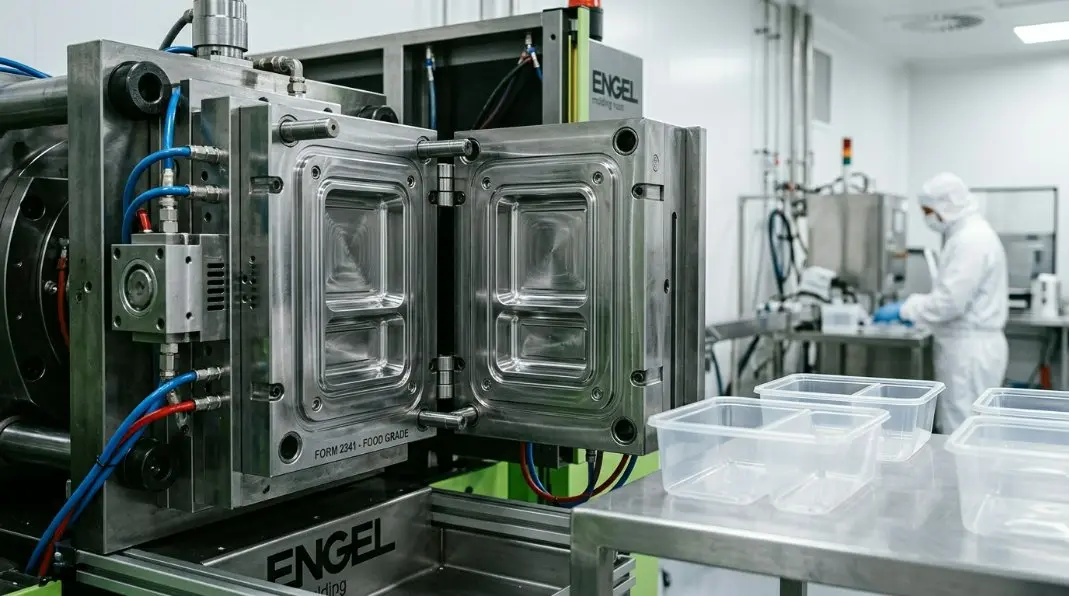
Key Takeaways: Executive Summary on 2026 Bioplastic Tooling & Optical-Grade Injection Standards
As we approach 2026, the landscape of food preservation is shifting toward sustainable materials and intelligent design. Cheung Shing, with over 30 years of manufacturing excellence, is at the forefront of this evolution. Our customized Food Storage Container Molds are now engineered to handle next-generation bioplastics while maintaining the optical clarity of traditional acrylics. This dual-requirement necessitates advanced thermal management within the tool to prevent yellowing or internal stress fractures during the injection cycle.
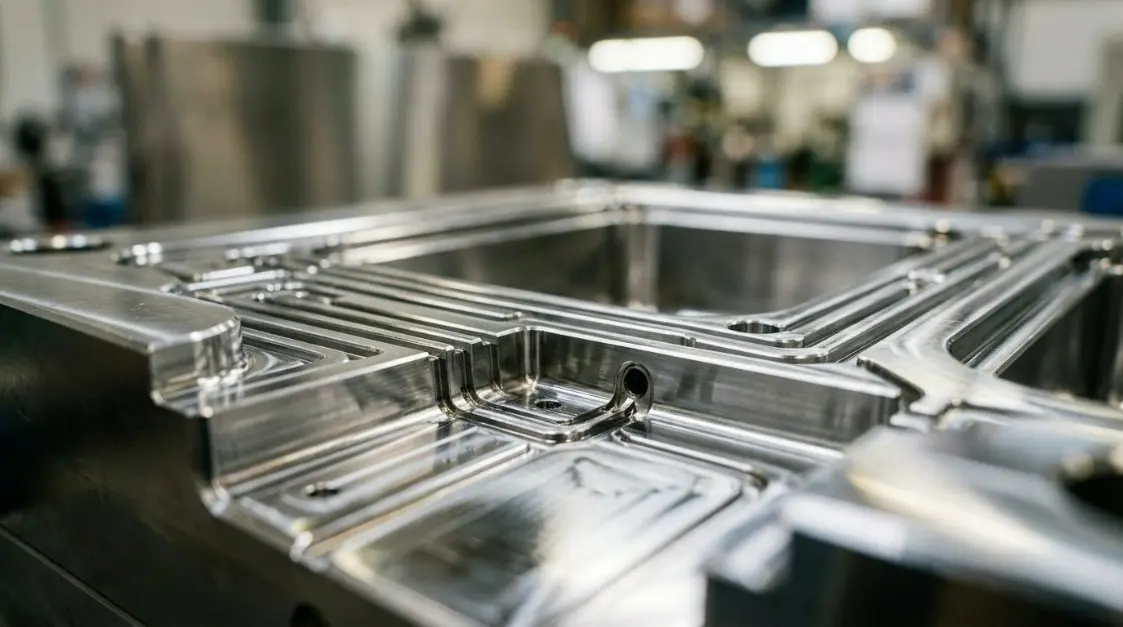
The Food Storage Container Mold-Sync Precision Protocol: Next-Gen Optical & Smart Molding in China
To meet the demands of global brands, we have implemented the Food Storage Container Mold-Sync Precision Protocol. This proprietary engineering methodology synchronizes the multi-cavity injection pressure with real-time mold temperature feedback. By utilizing this protocol, we achieve a refractive index consistency that mimics glass, making it ideal for premium kitchenware. This technology also allows for the seamless inclusion of sensor housing within the container walls, a critical step for the burgeoning Smart Home Ecosystem.
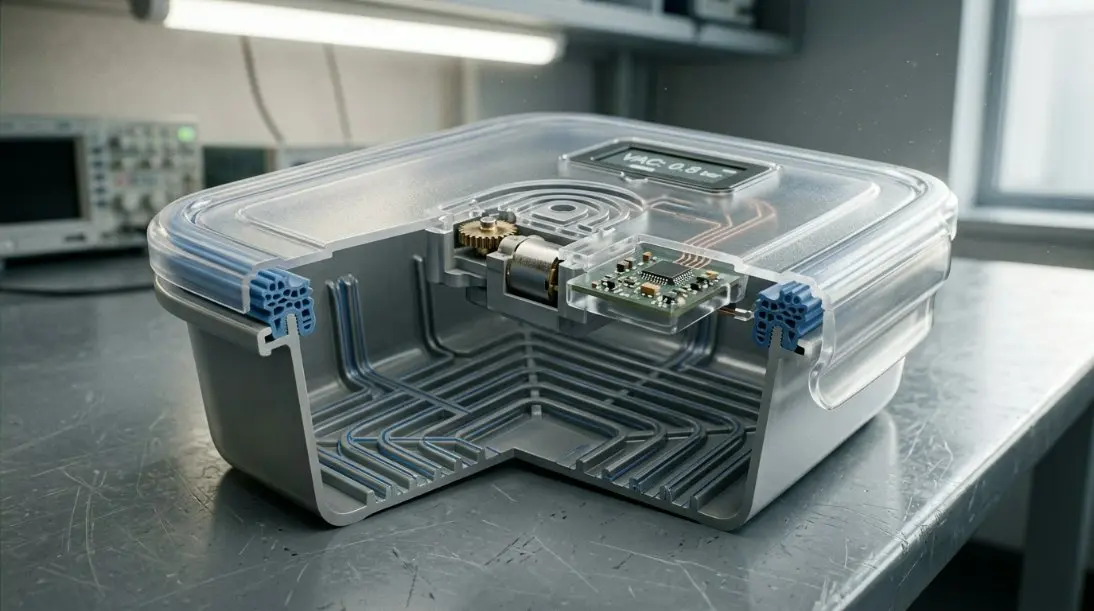
4-Step Practical Tutorial: Waterproofing, Mechanical Resealing & Installation for Smart Containers
-
Step 1: Precision Cutting Spacing per Meter and Mold Alignment
Ensure that the mold alignment pins are calibrated to within 0.005mm. For containers requiring integrated electronics, the cutting spacing for embedded wire channels must be calculated per meter of structural support to ensure no compromise in hermetic seal integrity.
-
Step 2: IP67/IP68 Waterproofing Resealing Process
Apply over-molding techniques to encapsulate electronic components. Our high-clarity plastic injection molds utilize a secondary TPE injection layer to create an airtight, IP68-rated seal that survives repeated high-temperature dishwasher cycles.
-
Step 3: Integrating Voltage Terminals and RGBIC Strips
For smart containers with ambient freshness alerts, voltage terminals are positioned at the base. RGBIC strips are embedded into a dedicated translucent cavity, ensuring uniform light diffusion without heat transfer to the food contents.
-
Step 4: Final Injection Encapsulation and Safety Testing
The final stage involves high-pressure encapsulation. Every unit undergoes vacuum testing and electrical safety checks to ensure the 2026 smart features meet global food safety and electrical certifications.
Technical Comparison Matrix & Specification Guide: Standard vs. RGBIC Smart Food Storage Container Molds
| Feature | Standard Food Mold | RGBIC Smart Mold |
|---|---|---|
| Material Compatibility | PP, PE, AS, Tritan | Tritan, Bioplastics, PC |
| Cavity Count | Up to 32 Cavities | 2-8 Cavities (Precision focus) |
| Sensor Integration | None | Embedded Freshness/Temp Sensors |
| Clarity Rating | High (Standard) | Optical-Grade Ultra-Clear |
Tooling Adjustments Matrix for Global Bioplastic Standards
Adapting to PLA or PHA bioplastics requires 20% higher cooling rates. Our tooling adjustments include beryllium copper inserts to accelerate heat dissipation, ensuring rapid cycle times and preventing material degradation.
Mathematical & Electrical Calculation Guidance: Power Supply Load Formulas for Custom Lengths of Food Storage Container Mold
When designing the electrical load for smart food storage systems, engineering teams must calculate the total wattage to prevent overheating within the plastic housing.
Total Load (W) = [Sensor Power Draw (mA) + RGBIC Peak Draw (mA)] x Voltage (V) / 1000
Safety Margin: Total Load x 1.25 (to account for thermal resistance of the plastic material)
Physical Wattage Loads and Safety Power Supply Variables
Typical smart container sensors operate at 3.3V or 5V. For a 4-container set, the safety power supply must handle a combined peak load of at least 15W to avoid voltage drops that could cause erratic sensor readings.
Compliance & Regional Certification: China 3C, GB Quality Codes, and Global OEM Specs
Cheung Shing adheres to the strictest global standards. Our molds are certified under the GB (Guobiao) quality codes for China, but we also ensure every Food Storage Container Mold exported to the EU or USA meets REACH, RoHS, and FDA compliance. For 2026, we are also integrating the China 3C certification for the electronic components within the mold design.
Frequently Asked Questions (FAQ): 2026 Optical-Grade Molding & Smart Home Ecosystems
How does the mid-2026 shift toward high-clarity optical-grade molding adapt from Chinese lighting manufacturing?
The shift involves borrowing lens-polishing techniques from the LED sector. By applying diamond-turning finishes to mold cavities, we produce food containers with the same optical clarity as automotive light guides.
Are these smart food storage molds compatible with Xiaomi Mijia, Tuya Smart, and Apple HomeKit?
Yes, our mold designs include universal PCB mounts that accommodate Zigbee or Matter-enabled chips, making them fully compatible with major smart home ecosystems including Xiaomi Mijia and Apple HomeKit.
What are the exact cutting tolerances, precise cutting spacing per meter rules, and safety instructions?
Cutting tolerances are maintained at ±0.01mm. Spacing for wiring channels should not exceed 5mm in depth to maintain structural integrity. Safety instructions include a mandatory insulation test of 500V DC for all embedded electronics.
What specific tooling adjustments are required for new global bioplastic standards?
Adjustments include modified gate diameters to accommodate the higher viscosity of bioplastics and specialized venting to manage the outgassing common with sustainable resins.
Looking for Custom Engineering/OEM Solutions?
As a top-tier professional manufacturer, we deliver direct factory-price solutions for dynamic scaling, engineering projects, and custom systems globally.
Visit Official Website →Send Inquiry



X
We use cookies to offer you a better browsing experience, analyze site traffic and personalize content. By using this site, you agree to our use of cookies.
Privacy Policy