
Retro Style Smart Audio Glasses for Outdoor Use and Custom Branding
You’re halfway through a hike, lining up a golf shot or watching a fishing float when a call comes in. Reaching for an earbud isn’t always convenient. Retro style smart audio glasses put wireless audio hardware into a familiar eyewear format, keeping one fewer loose accessory in your pocket.
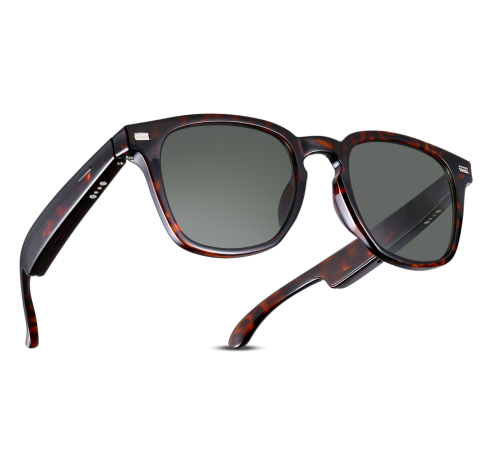
The G20 from Cheung Shing combines a retro frame with Bluetooth 5.4+EDR, dual 80 mAh batteries and a published weight of 35 g. It’s intended for activities such as fishing, golfing, hiking, biking and jogging. Brands and distributors can also request color and logo customization. Review the G20 retro smart audio glasses before comparing samples or requesting an OEM quotation.
From the Trail to the Golf Course: Who These Retro Audio Glasses Suit
These glasses suit buyers who want eyewear and Bluetooth audio in one wearable product. The classic frame shape may also fit retail collections better than overtly technical sports eyewear.
For an individual evaluator, the main questions are practical: Does the frame remain comfortable after an hour? Can calls be heard in wind? Are the controls easy to find without removing the glasses? For private-label buyers, fit consistency, logo position, color matching, packaging and repeatable production matter just as much as Bluetooth performance.
Cheung Shing Development (H.K.) Ltd. states a production capacity of 60,000 pieces per month and targets brands, e-commerce sellers, retailers, distributors, and OEM or ODM programs. Capacity isn’t the same as an agreed delivery schedule, so confirm allocation, sample timing and production lead time for your order.
Published Specifications for Evaluating Everyday Performance
The published figures provide a useful starting point, but they shouldn’t replace sample testing. Battery duration changes with volume, call use, connection conditions and temperature. Wireless range is also affected by walls, interference and where the connected phone is carried.
| Specification | Published G20 detail | What to check in a sample |
|---|---|---|
| Bluetooth | Bluetooth 5.4+EDR | Pairing behavior, reconnection and compatibility with target phones |
| Transmission distance | 10–15 m | Performance indoors, outdoors and with the phone in a pocket |
| Music playback | Approximately 5 hours | Runtime at the volume your customers are likely to use |
| Call time | Approximately 4.5 hours | Microphone pickup and intelligibility in wind or traffic noise |
| Battery | Dual 80 mAh batteries | Charging time, indicator behavior and standby drain |
| Weight | 35 g | Temple pressure, nose comfort and stability during movement |
| Water protection | IPX4 | Sweat and splash exposure within the rating’s limits |
Bluetooth 5.4+EDR, 10–15 m Transmission Range and Approximate Operating Times
Bluetooth 5.4+EDR identifies the published wireless specification; it doesn’t by itself guarantee audio quality or trouble-free operation with every phone. Test pairing, call switching and reconnection on the devices your customers actually use.
The stated 10–15 m distance is best treated as a favorable operating range, not a promise for every setting. Approximately five hours of music playback and 4.5 hours of calls may cover a workout or part of a day outdoors, but these aren’t all-day figures for heavy users.
35 g Construction, PC Temples, TR Frame, PC Lenses, IPX4 and Dual 80 mAh Batteries
The G20 uses PC temples, a TR frame and PC lenses. At 35 g, it falls into a relatively light wearable format, although comfort depends on balance and frame dimensions—not weight alone. Dual 80 mAh batteries supply the audio electronics. Confirm whether battery status is shown through voice prompts, lights or a connected device before finalizing customer instructions.
Outdoor Use Cases, Earbud Trade-Offs and the Limits of IPX4 Protection
On a golf course or fishing bank, integrated audio reduces the need to handle a separate earbud case. During hiking, biking or jogging, the value depends on frame stability, wind performance and how the speaker system sits relative to the wearer’s ears.
Audio glasses also involve trade-offs. If the speakers don’t seal the ear canal, wearers may retain more awareness of nearby sounds, but bass response, privacy and clarity in noisy places can differ from sealed earbuds. Speaker direction and volume should be evaluated on a physical sample rather than inferred from the product name.
IPX4 means protection against splashing water. It isn’t an immersion rating. Don’t position these as swimming glasses, and don’t assume they can tolerate heavy rain, showering or rinsing under a faucet. For cycling, buyers should also check local eyewear requirements and confirm that the supplied lenses provide the protection needed for the intended use.
Approve the Lens, Fit and Audio Hardware Before Choosing a Configuration
Lens Properties, Prescription Options, Frame Dimensions and Wearer Fit
The published description identifies PC lenses, but it doesn’t specify tint, UV performance, optical category, prescription compatibility or detailed frame measurements. Those points can materially change how the product may be marketed in the United States.
Ask for lens documentation and exact lens width, bridge width, temple length and overall frame width. If you need prescription fitting, polarized lenses or a particular UV claim, obtain written confirmation and supporting test information. Don’t print a claim on packaging because it’s common elsewhere in the category.
Speaker and Microphone Layout, Controls, Charging Method and Package Contents
Request clear diagrams or a sample showing speaker and microphone positions, control functions and charging contacts. Test accidental button presses, left/right control logic, call pickup and voice clarity. Charging cable type, charging time, included accessories, user manual language and retail package contents should be written into the approved specification. These details aren’t included in the supplied published data.
From Logo Submission to Mass Production: Cheung Shing’s Private-Label Process
Cheung Shing offers private customization for color and logo, along with factory-direct supply from China. A disciplined program should start with the target market, estimated quantity, color reference, logo artwork and packaging requirements. The supplier can then confirm what’s feasible and quote against a defined configuration.
Before mass production, approve a physical sample and a written specification covering frame and lens details, electronics, markings, accessories and packaging. Confirm minimum order quantity, tooling or setup charges, sample fees, lead time, payment terms, inspection method and shipping terms separately; no values for these items have been supplied here. Buyers can use the OEM smart audio glasses product page as the starting reference for an inquiry.
Answers U.S. Buyers Need Before Requesting a Sample or Quote
- Can the G20 be customized with a private-label logo?
- Yes. Cheung Shing states that color and logo customization are available. Ask which logo methods, locations, artwork formats and color tolerances can be supported.
- Is there a published minimum order quantity?
- No minimum order quantity was supplied in the available product information. Request it with separate pricing for samples, an initial order and forecast production volumes.
- Are these glasses waterproof?
- No. The published rating is IPX4, which covers splashing water rather than immersion. Avoid swimming, showering and other exposure beyond that rating.
- Can U.S. buyers assume regulatory and battery shipping documents are included?
- No. Ask which current test reports, product markings, Bluetooth documentation and lithium-battery transport documents are available for the exact configuration you intend to import. Have your compliance adviser verify what your sales channel requires.
- What should be tested first?
- Start with fit, audio audibility, microphone performance, controls, charging and realistic battery runtime. Then approve lenses, branding and packaging. To begin that review, send your quantity, destination market and customization brief through the retro style smart audio glasses inquiry page.
Send Inquiry



X
We use cookies to offer you a better browsing experience, analyze site traffic and personalize content. By using this site, you agree to our use of cookies.
Privacy Policy