
Trading Card Slab FAQs for U.S. Buyers in 2026: Clear UV-Protective Cases for TCG Cards
A trading card slab does two jobs: it protects a card from handling damage and presents it clearly for storage, display, or resale. The hard part is specifying the case around the actual card, sleeve, and closure method—not choosing a product from a photo alone. Cheung Shing’s CS-TCG-001 is a clear acrylic trading card protection case with UV protection and ultrasonic closure. It is aimed at collectors, retailers, grading-related applications, and buyers seeking an OEM or ODM supply partner.
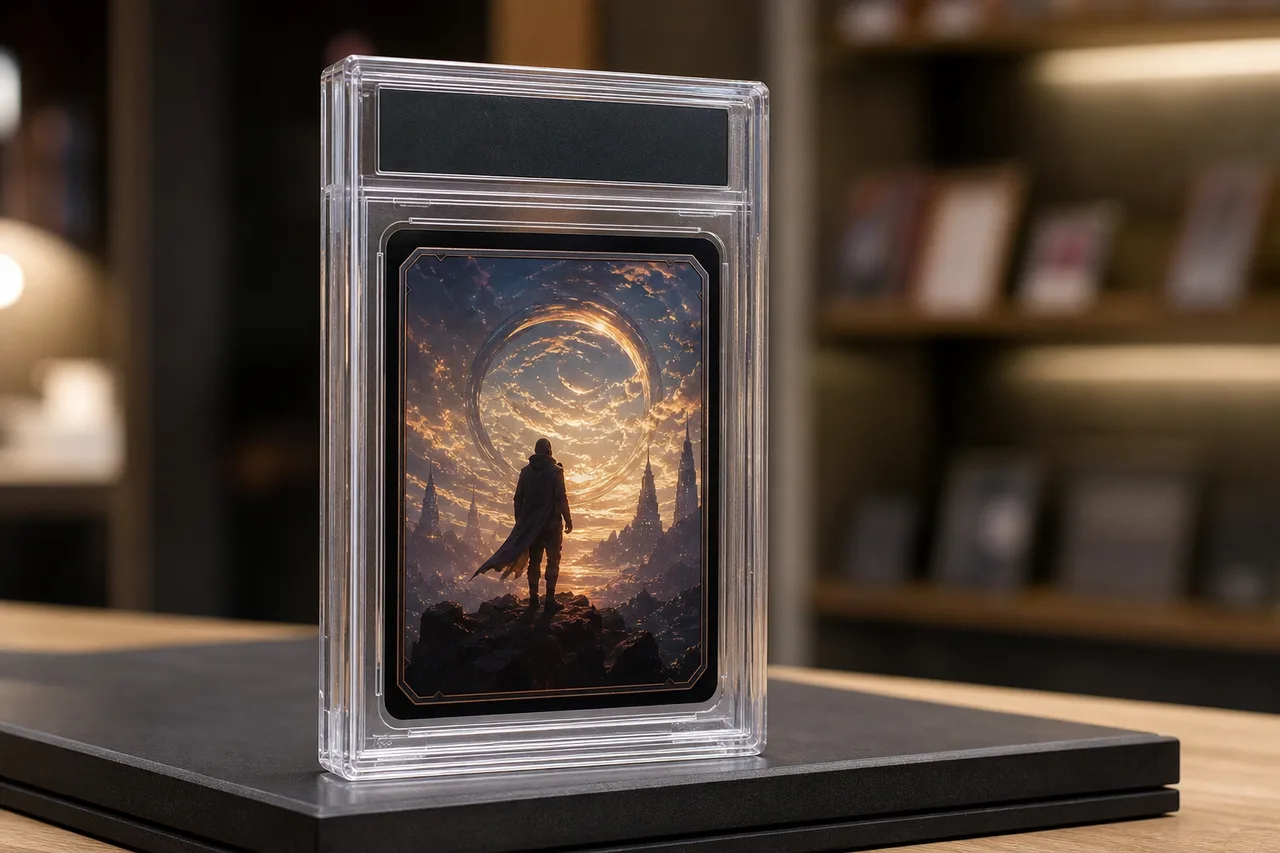
Key Takeaways: CS-TCG-001 Trading Card Slab at a Glance
Key Takeaways
- The CS-TCG-001 is a clear acrylic trading card slab measuring 80 × 7.5 × 134 mm and weighing 60.5 g.
- Its UV protection helps reduce exposure to ultraviolet light, but it should not be treated as a guarantee against all fading.
- Ultrasonic closure creates a closed case without relying on conventional screws or clips, but it may not be intended for repeated opening.
- Fit must be checked against the card’s dimensions, sleeve, and total thickness before production or retail launch.
- Cheung Shing supports OEM and ODM projects through its mold workshop and more than 100 plastic injection machines.
The useful distinction for buyers is between a display slab and a grading service. A case can protect and present a card; it does not assign a grade, verify provenance, or replace a professional authentication process. That matters if you sell high-value cards and your customers may assume that a sealed holder means the item has been independently assessed.
For normal collection use, look at the closure, optical clarity, dimensions, and packaging quality together. A case that looks good but arrives scuffed, traps dust, or cannot accept the intended card format will create more returns than sales. Cheung Shing’s Trading Card Slab is best evaluated with a physical card and the intended sleeve configuration in hand.
CS-TCG-001 Specifications and What They Mean for Card Protection
The listed CS-TCG-001 dimensions are 80 × 7.5 × 134 mm, with a listed weight of 60.5 g. Those figures describe the case as supplied; they do not by themselves confirm the usable internal cavity. That is the specification your engineering or purchasing team needs before approving a production order.
| Specification | CS-TCG-001 detail | Why it matters |
|---|---|---|
| Product type | Trading card protection case / slab | Supports protected storage and clear presentation |
| Material description | Clear acrylic | Provides a transparent display surface |
| External size | 80 × 7.5 × 134 mm | Useful for packaging, shelving, and shipping review |
| Weight | 60.5 g | Affects freight planning and retail pack weight |
| Protection features | UV protection and ultrasonic closure | Helps manage light exposure and case security |
UV protection is useful near retail lighting, windows, and display cabinets, but it does not make a card fade-proof. Light intensity, exposure time, temperature, ink formulation, and the card’s own condition still matter. Keep valuable cards away from direct sunlight and confirm the supplier’s test information if you need a defined UV transmission or aging requirement.
Cheung Shing identifies the closure as ultrasonic closure. In plastic assembly, this process uses high-frequency mechanical vibration to generate localized heat at a joint, allowing compatible parts to bond without adding a visible screw or adhesive. The result can be a clean, tamper-evident presentation, but closure strength and appearance depend on joint design, material condition, tooling, and process settings. Ask for samples before committing to a large run.
How to Confirm Card Fit and Specify a Trading Card Slab Order
Do not approve a trading card case based only on the nominal card format. Different TCG products, protective sleeves, inner sleeves, and top loaders can change the required cavity size. A tight fit may pinch corners or make insertion difficult. Too much clearance lets the card move, which can lead to edge impact during shipping.
Use this process before requesting a final quote:
- Select the exact card or card family you plan to package, including any sleeve that will remain inside the slab.
- Measure the card’s length, width, and total thickness at several points, especially if the card has a sleeve seam or protective insert.
- Send the supplier the physical card, dimensional data, drawings, or clear samples of the current holder.
- Request a sample with the intended closure and inspect corner clearance, movement, surface contact, dust, and optical appearance.
- Confirm carton quantity, individual packaging, labeling, logo treatment, color, and inspection criteria before mass production.
For a retail program, also test the finished package rather than the empty slab. Check barcode placement, shelf footprint, mailer fit, and whether the closure can be understood by a customer without instructions. If your product needs to accommodate graded cards, thick memorabilia cards, or multiple sleeve types, say so early. The CS-TCG-001 may be suitable for a defined card and sleeve configuration, but an alternate cavity or new mold may be needed for a different format.
Trading Card Slab Frequently Asked Questions
Will the CS-TCG-001 fit my trading card, sleeve, or card thickness?
It may, but the listed external size does not confirm the internal usable space. Confirm the case cavity against your card’s actual length, width, thickness, and sleeve configuration. The safest method is to provide Cheung Shing with a representative card or accurate samples and approve a pre-production sample. Do not assume that a standard-size TCG card, penny sleeve, or inner sleeve will fit without clearance review. A card that fits bare may not fit once sleeved.
Is ultrasonic closure permanent, and does this case provide professional grading or authentication?
Ultrasonic closure is generally intended to create a bonded plastic assembly rather than a holder designed for frequent opening. Ask Cheung Shing whether the selected joint is tamper-evident and how opening would affect the case. The slab itself is a protection and presentation product. It does not provide professional grading, authentication, provenance verification, or an official grade unless a separate qualified grading company performs those services.
For valuable inventory, keep the case function and the grading function separate in your product copy. That prevents customers from reading “sealed” as “authenticated.”
Cheung Shing OEM/ODM Manufacturing: Mold Workshop and Injection-Molding Capacity
Cheung Shing Development (H.K.) Ltd. manufactures plastic injection-molded packaging products, cases, boxes, pails, molds, and selected consumer-electronics products. Its trading card case program is supported by an in-house mold workshop and more than 100 plastic injection machines. For buyers, that matters because a slab is not only a finished clear case. Tooling accuracy, parting-line control, gate location, material handling, assembly, inspection, and packing all influence the product that reaches a collector.
Cheung Shing presents itself as an OEM/ODM-capable manufacturer serving buyers in multiple countries. A useful supplier conversation should cover more than logo printing. Discuss the target card format, cavity tolerance, acrylic appearance, UV requirement, closure design, mold ownership, sample approval, production inspection, carton protection, and replacement policy for damaged goods. If you need a modified size or a branded retail box, identify those requirements before tooling is finalized.
Buyers should also ask how cosmetic defects are classified. Clear parts can show scratches, flow marks, weld lines, haze, or trapped particles more readily than opaque parts. A written visual standard with approved samples is far more useful than a general request for “high quality.”
Request a Trading Card Slab Quote or Explore CS-TCG-001 for Retail and Collection Use: https://www.cs-dv.com/trading-card-slab.html
Prepare your inquiry with the card type, sleeve configuration, expected order volume, target market, packaging needs, branding requirements, and delivery destination. Include photographs or physical samples if fit is critical. Ask for the internal cavity dimensions, sample process, UV documentation available for the selected material or design, closure details, and the inspection standard used for clear cosmetic parts.
For a first order, sample approval is not a formality. Put the card into the slab, close it as intended, handle it like a shipped retail unit, and inspect it under bright light. That test will expose fit, dust, scuffing, movement, and packaging problems before they become a container-load problem.
Request a CS-TCG-001 Trading Card Slab Quote
Send Cheung Shing your card dimensions, sleeve details, quantity, branding, and packaging requirements to confirm fit and discuss an OEM or ODM production plan.
Visit Official Website →Send Inquiry



X
We use cookies to offer you a better browsing experience, analyze site traffic and personalize content. By using this site, you agree to our use of cookies.
Privacy Policy