
Why Choose Food-Grade 5L Round Pails for Liquid and Bulk Food Storage?
Sourcing packaging for five-liter volumes of syrups, sauces, or dry food ingredients usually ends up as an exercise in damage control. You spec a bucket, it passes a static warehouse test, but once it hits a pallet jack or a bumpy freight route, the lids pop. Or worse, the plastic taints the product inside.
B2B buyers frequently underestimate the physical demands placed on mid-sized bulk containers. A five-liter pail is small enough to be handled manually but heavy enough to cause significant mess and financial loss if it fails. We need to look at what actually keeps these consumable products secure across a supply chain, stripping away marketing claims to focus on structural integrity, material safety, and tooling precision.
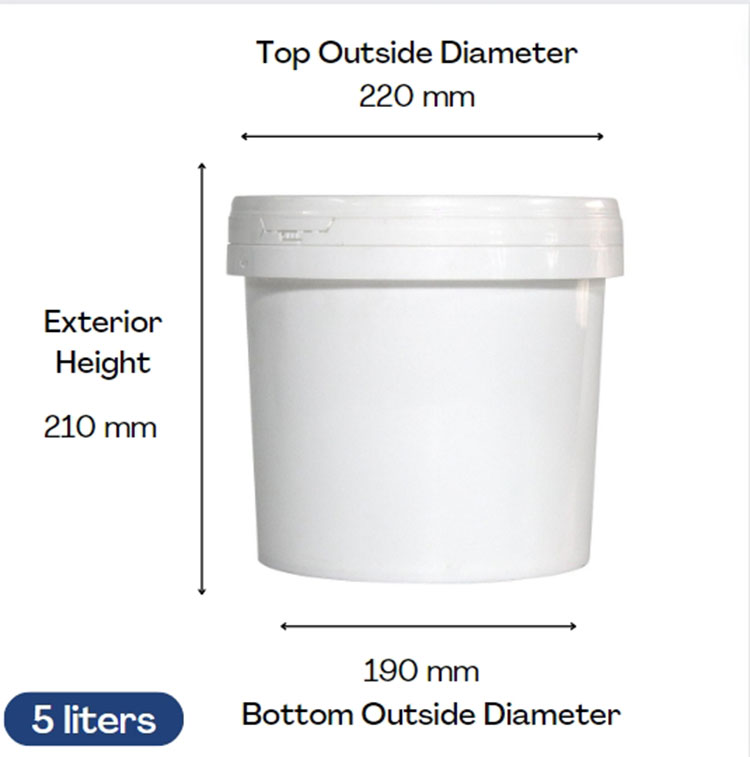
Balancing Packaging Costs With Verified Food-Grade Safety
Cost-cutting in plastic packaging usually happens in the resin. Some suppliers mix industrial regrind with virgin plastic to drop the unit price. If you are packing paints or construction adhesives, that compromise might go unnoticed. For edible oils, marinades, or dry baking ingredients, it guarantees a failed inspection or a ruined batch.
True food-grade packaging requires virgin polypropylene (PP) or high-density polyethylene (HDPE) manufactured in a controlled environment. The material cannot leach chemicals into the food, alter its taste, or degrade when exposed to acidic foods like tomato-based sauces or concentrated flavorings.
This baseline safety is what you pay for. When you evaluate food grade 5L round pails, confirm the resin source. Cheap pails look identical to compliant ones on a computer screen. The difference reveals itself only when you leave them in a hot warehouse for three weeks and the plastic odors migrate into your product. Buying from a manufacturer that strictly controls its material inputs is the only way to shield your brand from contamination liabilities.
How Extra-Thick Injection Molding Prevents Leaks and Freight Damage
A five-liter pail holds roughly 11 pounds of water, and significantly more if you pack dense syrups or pastes. Stack those four or five high on a pallet, and the bottom pail carries over 40 pounds of dead weight. Introduce vibration from a delivery truck, and standard thin-wall buckets flex. Once a pail flexes out of its circular shape, the lid seal breaks.
The structural integrity of a bucket comes down to wall thickness and the precision of the injection molding process. Thin walls save plastic and lower manufacturing costs. They also fail predictably under dynamic loads.
Cheung Shing engineers its 5L pails with extra thickness to resist this exact deformation. The injection molding happens in our largest workshop, utilizing high-tonnage machines to ensure uniform wall distribution. If the plastic is too thin at the base radius—a common defect in rushed molding cycles—the pail will crack the moment a worker drops it. By maintaining strict tolerances during the cooling phase, our pails hold a perfectly round rim. A perfectly round rim is the only geometry that allows a lid to form a reliable, leak-proof seal.
Matching 5L Pail Configurations to Liquid and Dry Bulk Applications
Not all food storage demands the same closure system. You have to match the lid configuration to the physical state of your product and how your end-user will interact with it.
Securing Consumable Liquids Against Transit Spills
Fluids find the weak point in any packaging. For liquid storage, you need lids equipped with elastomeric gaskets or tight-tolerance snap-lock designs. A tear-tab tamper-evident seal is non-negotiable for food safety compliance today. Once the tab is broken, the kitchen staff or end-user still needs a lid that reseals tightly to prevent oxidation and spoilage.
Some buyers opt for pull-up spouts for easier pouring of oils or thin syrups. These add complexity to the mold but prevent waste on the prep line. If your product is highly viscous, like a heavy frosting or peanut butter, a standard flat lid is less prone to failure and much easier to stack.
Maintaining Moisture Barriers for Dry Food Ingredients
Powders, grains, and dehydrated ingredients face a different threat: moisture transfer. A loose lid lets humidity in, clumping the product and drastically reducing shelf life. Here, stackability is just as critical as the lid seal.
The 5L pails must interlock cleanly. If the base of one bucket does not seat perfectly into the lid recess of the bucket beneath it, the column leans. A leaning stack distributes weight unevenly, bowing the lids and breaking the moisture barrier. Extra-thick walls and reinforced lid rims prevent this deflection, keeping your dry goods isolated from environmental humidity.
Navigating 2026 US EPR Laws With Compliant Packaging Materials
Extended Producer Responsibility (EPR) regulations are rolling out across multiple US states, targeting packaging waste. By 2026, brands selling packaged goods into states like California, Colorado, and Oregon will face fees based directly on the recyclability of their packaging.
Multi-material packaging—like a plastic bucket glued to a metal handle or lined with non-recyclable foil films—will incur steep penalties. Single-material (monomaterial) designs represent the safest compliance strategy. Specifying pure PP or HDPE for both the pail, the lid, and the handle ensures the entire unit drops easily into existing commercial recycling streams without requiring the user to disassemble it.
Procuring 5L plastic pails for food packaging that meet these monomaterial requirements now prevents a costly supply chain overhaul in eighteen months. You avoid the scramble to requalify new packaging while your competitors pay avoidable environmental surcharges.
Evaluating Direct Manufacturer Capabilities for Scalable Procurement
Sourcing through brokers hides the actual manufacturing conditions. Buying direct from a factory allows you to audit the tooling, the capacity, and the quality control processes. You need to know that a supplier can handle a sudden spike in your inventory needs without sub-contracting to a lower-tier facility.
Cheung Shing operates a 40,000-square-meter facility in HuiZhou, China, running over 100 injection machines. That scale matters. It means we have the physical infrastructure to meet aggressive B2B delivery schedules across China, Europe, and the US. But machine count means very little if the underlying molds degrade.
Validating Tooling Reliability Through Mold Warranties
Every plastic bucket starts as a machined block of steel. Over hundreds of thousands of cycles, cheap molds wear down. The mating surfaces degrade, leading to flash (excess plastic on the edges) or uneven wall thickness. When a mold degrades, your pails stop fitting their lids.
We back our production with a 2,000,000-cycle mold warranty. Because we run an in-house mold workshop with over 30 years of tooling experience, we build the molds to withstand relentless, high-pressure injection. A two-million cycle lifespan guarantees that the ten-thousandth 5L round pail you order fits its lid just as securely and cleanly as the first one.
Do not risk your food product on marginal packaging to save pennies on the unit cost. If you need stackable, heavy-duty pails that survive transit, resist deformation, and meet strict food contact standards, evaluate the manufacturer's tooling and resin policies firsthand. Contact Cheung Shing to review lid configurations and discuss how our extra-thick 5L round pails fit into your filling line.
Send Inquiry



X
We use cookies to offer you a better browsing experience, analyze site traffic and personalize content. By using this site, you agree to our use of cookies.
Privacy Policy